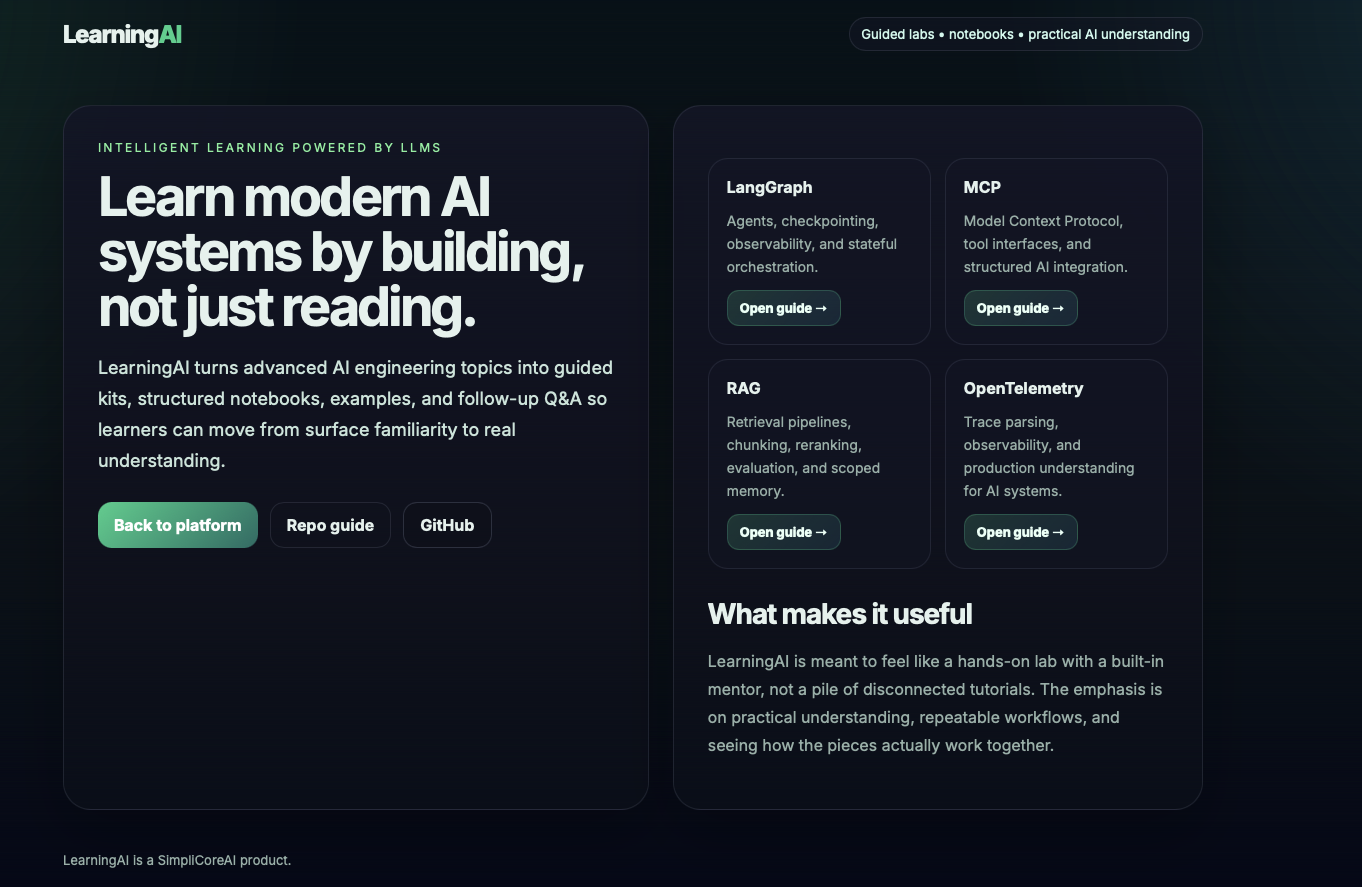
Learn modern AI systems by building, not just reading.
Retrieval pipelines, chunking, reranking, evaluation, and scoped memory.
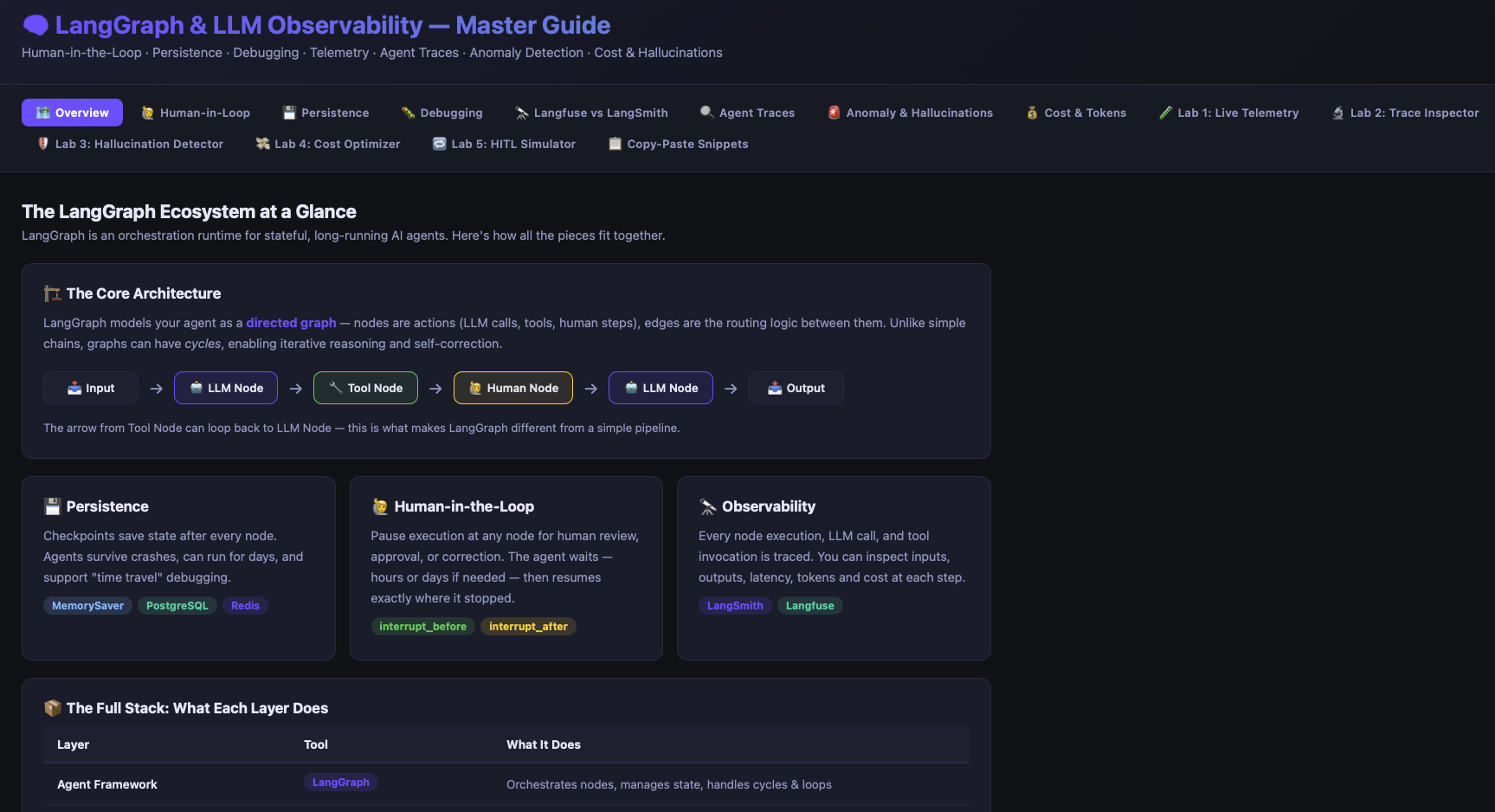
Agents, checkpointing, observability, and stateful orchestration.
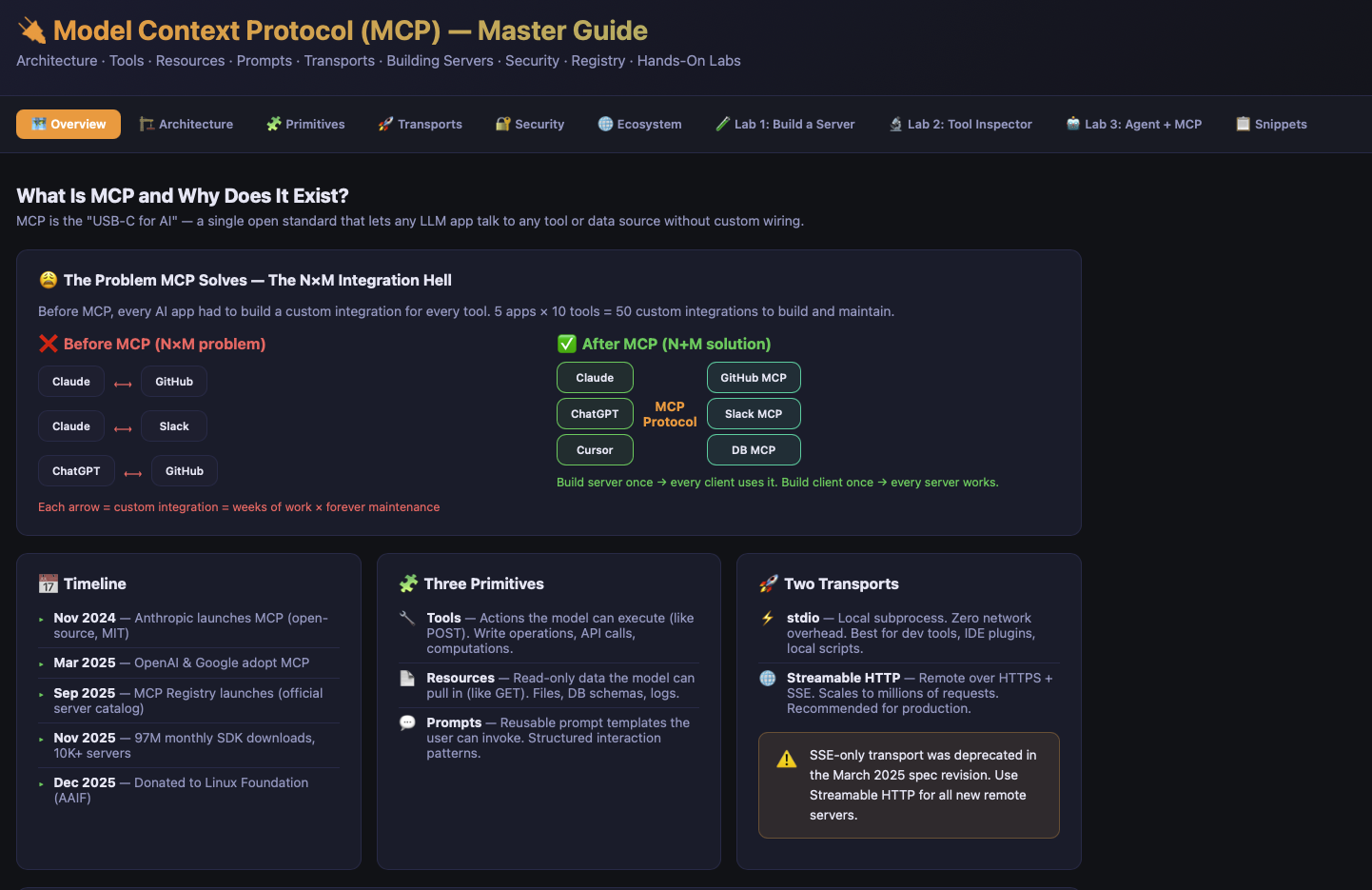
Model Context Protocol, tool interfaces, and structured AI integration.
How to shape inputs, constraints, and examples so models behave reliably.
Executive-level questions, decision framing, and talking about AI with clarity.
Practical heuristics for choosing between prompting, RAG, fine-tuning, and workflows.
Production stack thinking: memory, orchestration, observability, evaluation, deployment, and trust boundaries.
Metrics, test design, failure analysis, and judging model quality in practice.
How to structure orchestrators, workers, event IDs, approvals, summaries, and learning feedback loops without bloating the core runtime.
Quick overview first. Ask the LLM side panel when you want clarification or a little more depth.
Install it from the GitHub repo, open the landing page, and use the topic cards as a compact reference. Each guide is intentionally brief: enough to orient you, then the side-panel LLM helps with examples, context, or follow-up questions.
Orchestrator/worker separation, tool boundaries, event IDs, audit trails, approval gates, and summary-to-learning feedback.
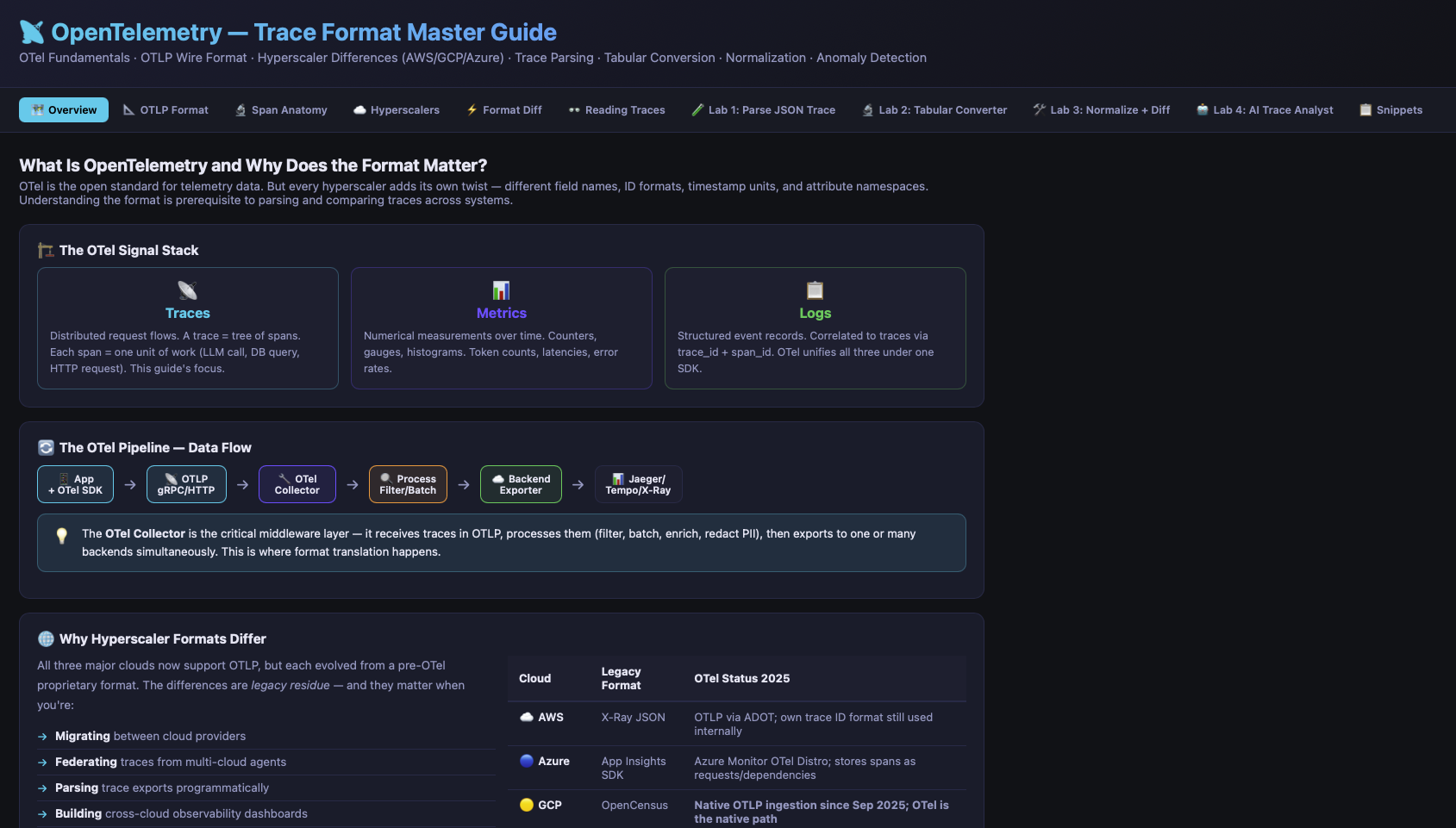
Same style as MCP and Otel: a guide page, a practical kit, and direct links to implementation examples.
Start with observability, trust boundaries, and orchestration before adding dashboards or more automation.
Build the Agentic Patterns topic as a first-class LearningAI page with reusable examples and links back into the PersGraph runtime story.
Image gallery
A quick look at the uploaded LearningAI visuals.
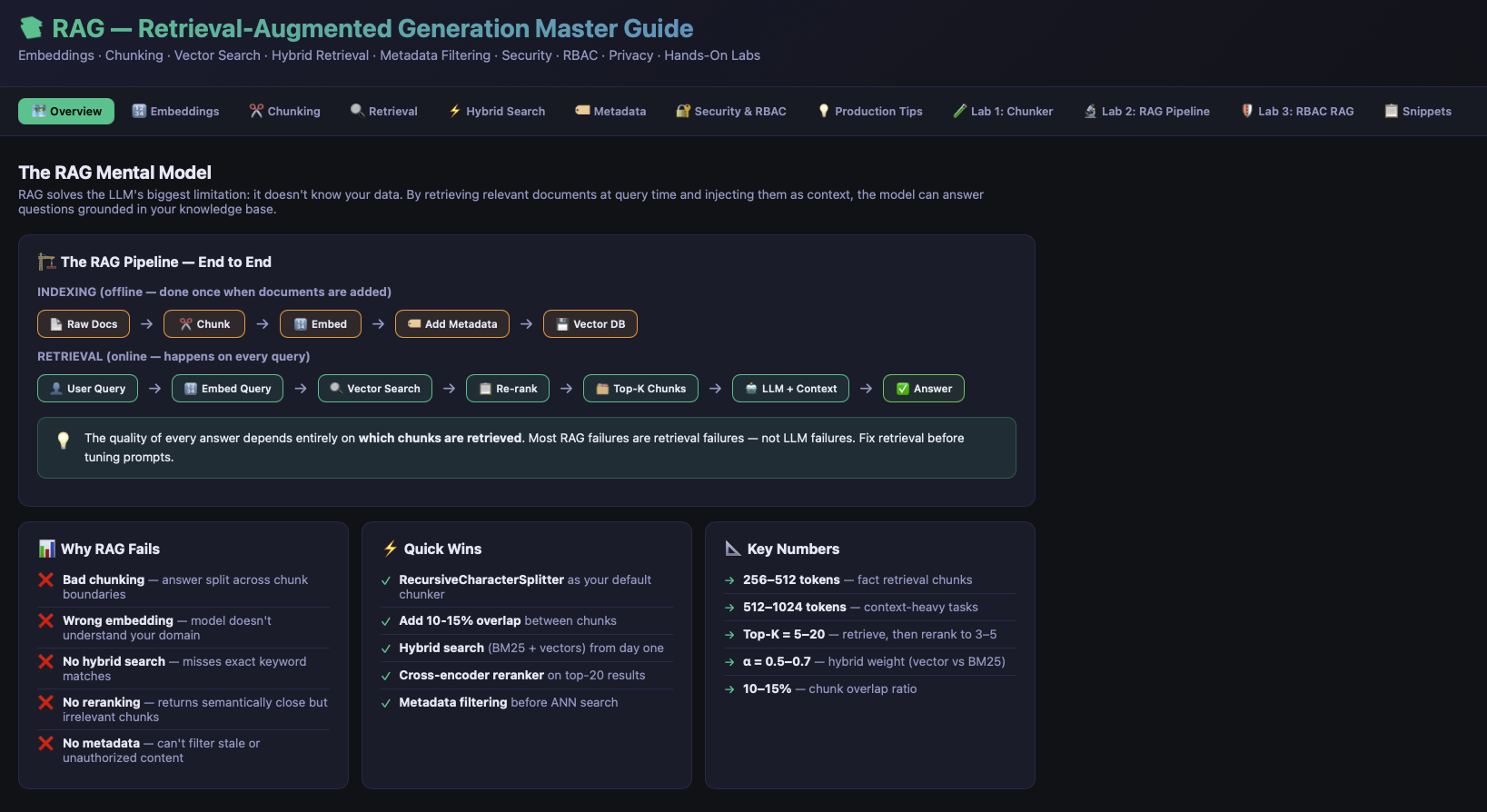
Useful references to revisit later
A small reading list for articles and concepts worth saving without forcing an ingestion run every time.
30 core concepts every developer should know — useful as a reference when thinking about agentic systems, orchestration, and runtime design.